![]() |
![]() |
![]() |
|
|
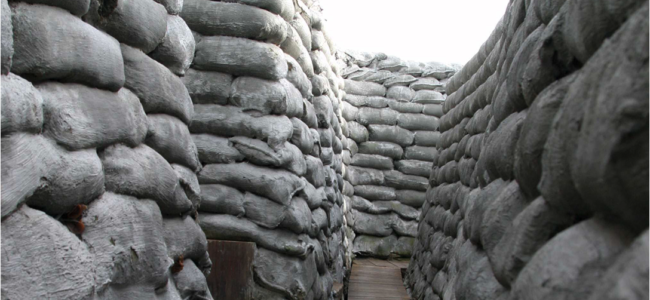
Contents : 2006, nr. 14 << backExplore your Prison Luc Devoldere A foreword: Why does someone take the trouble to get up and go somewhere, to travel? From Ypres to Verdun: Not the memory, but the spectacle...
(An Extract from Geert Maks ‘Europe)
Geert Mak At the beginning of 1999 Geert Mak left Amsterdam for a trip through Europe that was to last an entire year. It was a sort of final inspection: Mak wanted to see how the continent was faring at the end of the twentieth century. But it was also a journey through history: he literally followed the tracks of time, through the century and through the continent, beginning in January with the remnants of the Paris World Fair and roaring Vienna; and ending in December in the ruins of Sarajevo. This excerpt from 'In Europe' was written down between Ypres and Verdun, where the World War I 'has already entered the next phase, that of a popular tourist attraction, a mainstay of the regions commercial infrastructure.' Arrival & Departure. Travelling to and from the Low Countries
Raf de Bruyn Over the last 50 years tourist activity has increased considerably all over the world. More people are travelling, more people are travelling more frequently, more people are earning their living from tourism, whole regions have been able to build their prosperity on the development of tourism. In 1950 the World Tourism Organisation (WTO) recorded 25 million international tourists. In 2004 that figure stood at 763 million. This article looks at how the Low Countries behave as destination, the holiday pattern of inhabitants and how the authorities act to promote the Low Countries as effectively as possible as a possible travel destination. The Adventurous Endeavours of Joost Conijn. Potentialities of Autonomous Travel through Life
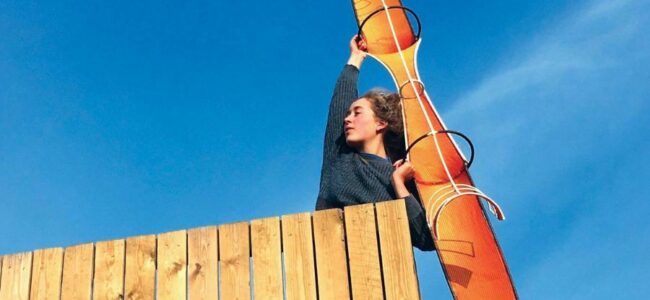
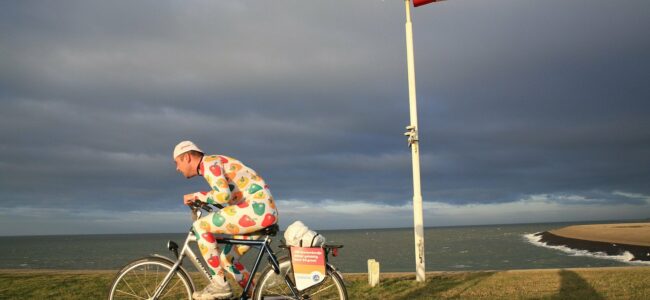
Jellichje Reijnders Joost Conijns work is prompted by his desire to move from one place to another under his own steam. This independent attitude characterises the way he moves through life, through the world, through the air. Driven by his urge for freedom and with adventure as his aim, he heads for the unexpected. Joost Conijn has made films in which he undertakes journeys in vehicles he has constructed himself – an aeroplane, a wooden car – and in which he follows seven feral children on their explorations in the area between a city and a free state. Travel as a sequence of unprecedented events, sparked off by his fascination with people and cultures that do not allow themselves to be dominated by prevailing doctrines. From Turpan to Kashgar: The bus is not suitable for foreigners
(An extract from Adriaan van Dis ‘A Barbarian in China)
Adriaan van Dis 'A Barbarian in China' is Van Dis travel report about his journey along the silk route. The title of the book, which became a bestseller in the Netherlands, recalls Henri Michaux 'Un barbare en Asie' (published in 1933, revised in 1945 and translated by Sylvia Beach as A Barbarian in Asia in 1949), a pithy, incisive, cutting look at 1930s Asia through this Belgian's eyes. Portrait of the Traveller with Burin and Printing Press. The Representation
of Dutch Maritime Expansion in the De Bry Collection of Voyages
Michiel van Groesen When the Dutch Republic first embarked on overseas expansion, its impact was immediate. There wa a huge demand for travel accounts and the De Bry publishing house in Frankfurt caterred to this. The collection of voyages was indisputably the officinas ‘magnum opus, consisting of reports of European expeditions to Africa, Asia, and the New World. In order to meet the demands of their heterogeneous, international group of readers, the De Brys stressed the otherness of the natives encountered on distant shores, juxtaposed by European technical expertise and civility. The early Dutch maritime expeditions, by Gerrit de Veer and Barent Jansz, but also by other early icons of adventure like Jan Huygen van Linschoten, Willem Lodewijcksz, and Pieter de Marees, were made to fit this pattern. From Africa to Africa: The Return of a Dead Traveller
(An Extract from Frank Westermans ‘El Negro and Me)
Frank Westerman December 1983. In a Spanish museum of natural history, nineteen-year-old Frank Westerman finds himself standing face to face with a stuffed African – El Negro. Who is this man? Who stuffed his body? Twenty years later, the author follows El Negros journey from Paris (1831), via Barcelona (1888) to the Pyrenees, where he was on display until 1997. Along the way he brings El Negro in his book with the same title to life as a commentator on his time: an unknown black man who – nailed to a pedestal – casts a disturbing perspective on European views of slavery, colonialism and racism. Out and about with Bruegel Manfred Sellink Pieter Bruegel the Elder may be seen as one of the few artists who for centuries have played a role in determining the perception and image of Flanders. Whether historically accurate or not, many people – and certainly not only foreigners – still associate the southern Low Countries with the stereotype of ‘Boeren-bruegel, or ‘Peasant Bruegel: the world seen as one great gluttonous feast, complete with food, drink and dance, in picturesque, slightly chaotic villages in the countryside. However interesting it may be to speculate about the extent to which the image and the self-image of ‘the Fleming flow into each other, in this article I would like to draw attention to a completely different aspect of Bruegels work, one that is closer to the historical reality of his time, which can perhaps bring us closer to the figure of the artist, who is often difficult to get a handle on, and which at the same time can also provide us with the necessary information about the artistic and intellectual climate that he lived in. This article follows the artist on his journeys and excursions in Flanders and far beyond. Christoph Finks Travel Accounts . Aesthetics of the Contemporary Worldview
Filip Luyckx Amongst modern Flemish artists who have an original approach to the theme of travel, Christoph Fink (1963-) is a name that cannot go unrecorded. Recent exhibitions in Cleveland, Ohio, and at The Drawing Center in New York confirm the international interest in his work. Travel has a great deal to do with abandoning our familiar categorisation of time and space and going in search of new horizons, with the aim of accelerating our experiences or slowing them down. A number of phases can be distinguished in the works of Christoph Fink. As spectators we have access only to the final installation, which does, however, document the preceding elements meticulously. Fink first maps out a journey between a point of departure and a final destination, by way of a number of checkpoints such as large roads, towns or mountain peaks. This already serves to establish a narrative thread, along which he can structure all his observations. As he cycles or walks along this route, his path is certainly subject to the varying nature of the terrain and the circumstances. The precise route to be followed between the checkpoints depends partly on chance. This makes the course of the journey unpredictable, but also fascinating. Notices to Travellers
(Poems by W.J. van Zeggelen, Nicolaas Beets, Jopie Breemer, Richard Minne,
Jacqueline E. van der Waals, Jan van Nijlen, M. Vasalis, Bergman, Miriam Van
hee, Ingmar Heijtze and Menno Wigman)
Anton Korteweg Poems about travelling and not travelling A Road Less Travelled. The Road to Antwerp Beach – A Journey along the N1
Derek Blyth When the author of this piece decided to drive from Brussels to Antwerp on the old N1 road, it was partly an attempt to discover the other Flanders, the space between the cities. He imagined that the whole journey would take a day at most. The total distance is 46 kilometres and the speed limit is normally 70 kilometres an hour. Even if he seriously dawdled along the way, hed be in Antwerp by late afternoon...he thought; but he was wrong, and it took a day to cover the first 18 kilometres and two days to reach the end of the journey.
Even at Home I am not a Tourist Filip Matthijs The author doesnt need a reason for not travelling. Just as the reader doesnt need one when he decides he will go and pack his suitcases. This article is not a diatribe against tourism – and most certainly not against travelling. Ad Vingerhoets – the ‘holiday prof of the Netherlands – is a much-travelled man and now he never goes on holiday any more: ‘It has not made me any happier. Maybe I simply have no talent for holidays. That is how the author feels, too. For him there is no anticipation, no holiday depression or euphoria of the unknown – and absolutely no post-holiday blues or enthusiastic braying that you really should have been there. The Dutch Raise their Voices Gerard van Westerloo If the International Quality Press is to be believed, the entire Netherlands has recently undergone a complete metamorphosis. Until recently it was supposedly inhabited by a collection of decent, tolerant, liberal, open-minded burghers who willingly opened their doors to fugitive French Huguenots, Portuguese Jews, Antwerp Stocking Merchants and other refugees of conscience. But hardly had the twenty-first century made its entrance than these same unbelievably kind-hearted characters could not find words enough to express their abhorrence of the wave of colourful arrivals from places like Somalia, Bosnia and even Pakistan who arrived seeking refuge along the banks of the great rivers. To add insult to injury, they built places of worship not to the glory of the God of the Netherlands but in honour of Allah, who is notoriously intolerant of other Supreme Beings. This dramatic quasi-romantic representation of events, which by and large is widely believed not just outside but also within the Netherlands, seems too neat to be true. Can a nations character really change so fundamentally in the space of a couple of years? The author begs to differ. Perfectly Happy in Vinex-Land Marieke van Rooy The Supplement to the Fourth Policy Document on Spatial Planning (in Dutch: ‘Vierde Ruimtelijke Nota Extra, hence VINEX) set out a plan for 635,000 new houses to be built between 1995 and 2005 at inner city locations and on the outskirts of cities. These dwellings are needed to accommodate the growing number of families, but particularly also to keep the well-to-do middle classes in the cities. The launch of Vinex provoked immediate and constant criticism, mainly from experts in architecture. ‘The ghettos of the future and ‘an avalanche of doorzonwoningen are some of the critical comments made at the beginning of the nineties. It would be short-sighted, though, to brand these Vinex suburbs as failures solely on the basis of criticism by the professionals. Surely, isnt it just as important to look at the experiences and opinions of the people who actually live there? And here you are faced with a paradox. For it appears from various studies that the Vinex-dwellers are, with a few reservations– such as the lack of facilities and the delay in providing decent public transport – very satisfied with their new biotope.They seem totally contented with their own little patch of suburbia. So perhaps after all the average Dutch person is not hankering after all kinds of new features for the interior of his house. And is that really so strange? Isnt it the case that in this age when image is everything we derive our image increasingly from externals such as clothing, cars and mobile phones? Blood or Soil. A Stroll through Belgian Absurdistan Carl Devos Belgium, a favourite haunt for lovers of the absurd, is hidden away on the edge of a political twilight zone. Belgium is a state that should not really exist. It is an experiment in wish-fulfilment; an artificial synthesis. Belgium is a no-mans land between fact and fiction, a ‘faction if you will; a literary figment of the imagination. It is the cold turkey of pragmatism, the sophists nirvana. In Belgium one can see the truth of Senecas observation that ‘Nullum est vitium sine patrocinio, that there is no vice without patronage or influential support. Belgium has ended up in a vicious circle -- a spinning, centrifugal vicious circle at the centre of which lies the desire to secure land for ones own kith and kin. With several more decades of constitutional reform in prospect, one can only wonder what will be left of Belgium, or indeed what will be left for Belgium, the state with no citizens. The End of a War. National and Private Monuments Commemorating the Great War in Flanders
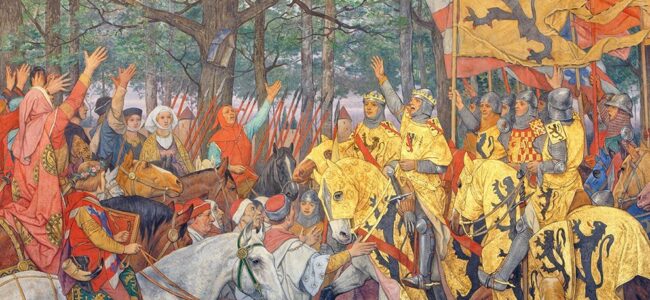
Piet Chielens In the course of 2005 an inventory of relics of the Great War in the Westhoek region of Flanders will become available. This joint initiative by the Province of West Flanders and the Service for Monuments and Landscapes of the Flemish Community will contain over 1200 entries: cemeteries, monuments, bunkers, trenches, memorial plaques, stretches of country, mine craters, stained-glass windows, dugouts, thanksgiving chapels, archeological sites, street names… It will be an exceptionally useful and valuable tool for assessing the significance which the Great War once had for this part of the world, and which it still has to this day. Now that the generation of World War I has practically died out, these relics provide the only material evidence of this devastating experience, and the memorial monuments seem to recover their original significance. A number of those national monuments appeared in Flanders after the War. They are all ‘national by nature, yet they are all very different. The differences define some general meaning and purpose for such monuments, yesterday but also today and tomorrow. The most important of these national monuments in the Westhoek are the Yser Tower in Diksmuide, a Flemish nationalistic monument, built twice; The Menin Gate at Ypres, the oldest of the national monuments here and one that serves a double purpose; and the Island of Ireland Peace Park in Mesen, the most recent and maybe the very last of the large national monuments about the Great War ever to be erected. Self-Willed or Superfluous? Art in Public Space in the Netherlands
Ingeborg Walinga Artists in the Netherlands now help to give shape to the public space. However, you can have too much of a good thing. With the mushrooming of art in public areas over the past 50 years and the related stifling red tape, a lot of forgettable or even downright disastrous art now takes pride of place in public areas. What we need, according to Walinga, is clients who get closely involved in the project, are audacious in their choices, formulate a clear assignment and then give the artists the artistic leeway to do their work. In return, artists need to take into account the social function that public areas have, while retaining their own distinctive artistic approach. Neither side should underestimate the general public. People do want to be part of this artistic adventure, and they are not content with just having an equestrian statue of a prince or a prime minister in bronze. Borremans Circus Patrick T. Murphy Michaël Borremans has a deft touch with the handling of paint. At a time when painting itself is at issue, Borremans makes mysterious and compelling paintings that combine both skill and intelligence. He has succeeded in creating, within a self-inflicted tight tonal range, a resinous and resonant art that demands a contemplative response. Borremans work epitomises time. Time in the making, a time encapsulated, and consequently, time for its reception. In an era when visual communication is getting faster, his paintings seem to be getting slower. In that, he is near to the artist Vija Celmins who also succeeds in making hard-earned paintings. But unlike Celmins who leaves her meaning dangling without a cause, Borremans has defined his themes, albeit obliquely. There is a ringmaster in charge here but his animals are not exotic, they are beasts of burden – the burden painting, the beast painting, Hit the Road. Bands in Search of an Audience Abroad
Lutgard Mutsaers The idea that a rock group from the Low Countries might attract large crowds elsewhere has become less and less bizarre in recent years. The worlds become smaller because of the spread of music via the internet, which means that fame is no longer just a question of being in the record shops and the magazines and appearing on the radio and television. Flights to popular destinations have become cheaper, so groups can go abroad under their own steam. But the explanations not that simple. When bands go on the road, its generally not something that they do on spec; there have to be destinations, contacts, invitations and agreements. A hit in your own country and in the countries where your music is distributed will signal the start of a tour for bands who are signed to big labels. But how does it work for bands who havent had any hits, for bands who have contracts with independent labels or groups working on a ‘do-it-yourself basis? What does ‘success abroad mean when a group has to manage without the traditional channels of the established music industry and media? What sort of adventure is a band of this kind, often independent of the prevailing tastes and trends in the music industry, embarking on when they attempt to find an audience in another country for their concerts and CDs? Joost Swarte, Knight of the Clear Line Louis van Dievel In April 2004 Joost Swarte was knighted by Queen Beatrix of the Netherlands. Admittedly, he had to share the honour with, among others, the enormously popular singers Marco Borsato and Frans Bauer, but even so.... It is still an honour that was not accorded in his lifetime to, for example, Marten Toonder, the godfather of the Dutch comic strip who died in 2005. Once, but a very long time ago, Joost Swarte drew the underground comic Jopo de Pojo, that was full of sex and drugs and rock n roll. Nowadays Swarte is a law-abiding citizen with an exceptional graphic talent, he enjoys an international reputation, and is an artist who can do whatever takes his fancy: create posters, glass windows and postage stamps, or design bookcases, watches and buildings. Theres a name for that: artistic Jack-of-all-trades. The Tao of Literature.Life as it is, according to Patricia de Martelaere
(with two Extracts from ‘The Unexpected Answer by Patricia de Martelaere)
Frank Hellemans Patricia de Martelaere herself is unwilling to provide any detailed explanation of her novels. She refuses to give interviews and declines TV appearances. She is first and foremost a professor of philosophy, as well as being a brilliant essayist who writes lucidly and inspiredly about the very essence of life itself, about love and death. At the end of 2004, she published 'The Unexpected Answer' (Het onverwachte antwoord), a bizarre love story which no-one can quite make head or tail of. Transparent as De Martelæres essays are, just as ‘unexpectedly obscure and sometimes even irritating is this literary tour de force, full of associations, philosophical plays on words and lyrical asides. And yet in a certain sense this novel is her ultimate book. Not just because it is twice as thick as her four previous novels. Anyone who browses through the essays and readings she produced on the literary sidelines will gradually discover the oriental ideas that lie behind the new De Martelaere. If prior to 1992 her writing was rational and Western , since then she has been oriental and inspired in equal measure. What does the path look like that this philosopher wielding a literary pen has followed until now? Mystery on the March. On Dirk Braeckmans Photos
Hans Aarsman Theres a vagrant living in Dirk Braeckmans photos. No-one has ever seen him, but he does live there. He is the one operating the camera. He often hangs around in buildings where the gas and electricity have been cut off. Where it is pitch-dark and freezing cold. It may even be haunted. Our vagrant doesn‘t mind, as then at least he has something to kill time with. He sits in a corner, ears pricked for any suspicious sound, camera at the ready. As soon as he thinks he hears something he swings the camera towards it and presses the button. Then, in the light from his flash he descries the outlines of a sofa, a chair, a radiator, but never a ghost. That does not mean there are no ghosts. That is not a valid conclusion. They may just be keeping out of the picture. Doing the Fosbury Flop. Gerrit Krols Literary High-Jump
(with two Poems and an Extract by Gerrit Krol)
Ad Zuiderent The graphic artist M.C. Escher became famous for ‘impossible objects such as his ‘impossible cube, a three-dimensional image that only ‘works because it is projected onto a two-dimensional plane surface. Krol is Eschers literary counterpart; he uses language to portray human relationships and human endeavour, and he does so mainly by projecting one situation onto another: murder onto mathematics, daily life onto science, sex onto eternity, etc. In doing so he allows us to believe in the impossible. He is a great writer. And not yet lost in translation. One Only Has Oneself. Fernand Khnopff, a Belgian Dandy in European Symbolism
Johan de Smet Fernand Khnopff was more personally and artistically oriented towards contemporary British art and culture than any other Belgian modernist of his generation. As the Brussels correspondent for the authoritative journal The Studio, and an occasional writer for The Magazine of Art, he promoted Belgian art among the English-speaking public. He also wrote essays on British art that were highly regarded in Great Britain. His predilection for British savoir vivre, which incidentally he loved to flaunt, combined with a wide international reputation to give him access to the most important avant-garde circles in Europe. A Beacon for Europe Emile Verhaeren 1855-1916
(with Four Poems by Emile Verhaeren)
Vic Nachtergaele ‘Tolerant but indifferent to so many of her distinguished visitors, England made no exception in the case of Emile Verhaeren, the fair-haired young Belgian poet, wrote Beatrice Worthing.Though the poet came to Britain almost annually from the 1880s onwards, appreciation of his work did not extend beyond a small band of enthusiastic translators: Michael Sadleir, Arthur Symons, Osman Edwards, Jethro Bithell, F.S. Flint, and Alma Strettel… Consequently one will look in vain for any influence on English fin-de-siècle poetry. Only after 1900, when all Europe acclaimed Verhaeren as a leading poet and thinker, did the English public at large pay any attention to the author. Verhaeren was certainly an exceptional figure: first, as a French-speaking Belgian of Flemish origin, he had taken the literary world of late-nineteenth-century Paris by storm. Later, in the years 1900 to 1914, he became a guiding light for the European intelligentsia, fêted as far afield as St Petersburg and Moscow! Yet after World War I he disappeared virtually without trace from the literary firmament. What caused the meteoric rise of this Flemish poet who wrote in French? And what caused him subsequently to disappear into the mists of history? Loud Chords and Calm Moments. Louis Andriessen, Composer
Emile Wennekes Louis Andriessens oeuvre now stands at around one hundred published works. Their unique and headstrong idiom, their instrumentation and their role in the history of music make some of the compositions that have been discussed key works of international composition from the last quarter of the twentieth century. Other works, however, have more of a one-off character. For that too is a side of Louis Andriessen: the artisan, the craftsman, the musician in heart and soul, who doesnt approach music like a cell biologist, but sees it as a living passion that is constantly being reinvented. What is always present, even in the shorter pieces, is his strong and recognisable musical personality. Generally you can tell after just one bar: this is Andriessen. Setting the tone… Leeuwarden: Triumph and Tragedy Peter Karstkarel When it came to higher education, Leeuwarden was the place to be. At the end of the sixties, after having spent a few years in Amsterdam, the author returned to Friesland badly infected with the artistic bug. He thought he might do something with language or the fine arts, but his talent was meagre. Evening classes in Dutch Language and Literature seemed promising. It wasnt his mother tongue that he and his family spoke, and it wasnt Frisian either. They spoke something in between – city Frisian – a broad, agreeable little language that you only heard in Frisian cities and larger towns. Its doomed to disappear, though the author speaks it to this day.Thats Leeuwarden for you: not Dutch, not Frisian, but something in between. Yes, But. Rembrandt as an Unstable Medium
Gary Schwartz Rembrandt studies are a nerve-racking field. It is nearly impossible to write a proper paragraph about the artist or his work without stepping on the toes – or kicking the shins, depending on your mood – of a colleague. Part of this is due to the argumentative nature of scholars and part to the equivocal personality of the artist. By the time he arrived on the scene at the age of eighteen or nineteen, the man had set in swing a dialectic that has never since come to rest. Students of Rembrandt never had a chance. The problem with Rembrandt, once one is resigned to the impossibility of capturing him entire, is how to deal with the Yes and the But. In the biography, too much Yes leads to hero worship, too much But to a misanthropic image of the man that no one is willing to accept. In attributions, too much Yes creates an oeuvre lacking in critical definition, too much But a corpus that eliminates work of high quality for which no other candidate is available. Welcome, then, to the Rembrandt Year 2006. What will it bring us? Will the impossibility of dealing with Rembrandt/‘Rembrandt only increase? Or will the aggregate of contributions – more than 60 exhibitions and God knows how many books – finally turn the corner from Yes, But in the direction of But Yes! ‘Nothing worthwhile ever happens, except maybe some acts of consolation. Literature according to Herman Brusselmans
(with Two Extracts by Herman Brusselmans)
Bart van der Straeten Herman Brusselmans, the self-proclaimed Handsome Young Jupiter of Flemish literature, is nothing if not prolific. Since his debut in 1982 he has published two books a year with clockwork regularity and his total production now exceeds thirty titles. His first effort, a collection of stories, was not an immediate hit, but in the novels that followed it Brusselmans attracted an ever-growing band of readers with his humorous, semi-autobiographical accounts of the often less than scintillating life of a young man afflicted with angst and melancholy in the 1980s. Brusselmans brought sex, music and booze – in short, rock n roll – into Flemish literature. These days Brusselmans is if anything better known as a Flemish Celebrity than as a writer: when he married for the second time in 2005 there was wide coverage in newspapers, magazines and even gossip sheets. He sells more books than many Dutch-language authors could ever dream of: between 10,000 and 20,000 copies per book. But what sort of books are they? ‘Cast off the names that others had applied. On the Poet Gerrit Achterberg
(with Two Poems by Gerrit Achterberg)
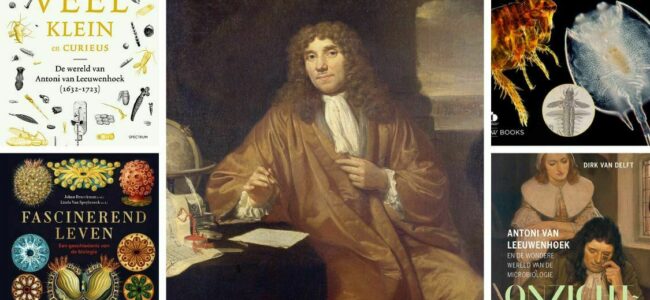
Peter de Bruijn The ‘repulsive oeuvre of a dangerous psychopath or ‘the Netherlands greatest poet: Gerrit Achterberg (1905-1962) is undoubtedly the most controversial figure in twentieth-century poetry. A hundred years after his birth he is still either acclaimed or reviled, as was apparent once again in the responses to the new edition of his 'Poems' (Alle Gedichten) that appeared in 2005. In the same newspaper the poet and critic Piet Gerbrandy mercilessly pilloried the ‘clumsy artificiality of this introverted ‘monomaniac, while critical elder statesman Kees Fens then defended ‘the incomparable linguistic world of Achterbergs ‘indestructible poetry. This was the latest controversy in a seemingly endless chain of disputes that flare up with increasing regularity. Meanwhile the repulsive oeuvre has found its way to at least a hundred thousand readers at home and abroad (it has been translated on numerous occasions into at least fourteen languages) and has been the subject of an estimated three thousand or more reviews and studies. Are all those readers and reviewers wrong? The Unexpected Popularity of Antoni van Leeuwenhoek Klaas van Berkel When the election for the greatest Dutch person of all time was held in 2004, Antoni van Leeuwenhoek came fourth after Pim Fortuyn, William of Orange and Willem Drees, but before Erasmus, Rembrandt and Vincent van Gogh. Van Leeuwenhoeks triumph was largely overlooked by the press; all the media attention went to the questionable methods that had put Fortuyn in first place. Yet its surprising, to say the least, that of all the representatives of the world of culture and science, it was Van Leeuwenhoek who managed to garner so many votes. If the question regarding the greatest Dutch person had been asked of practitioners of the natural sciences alone (to limit ourselves to that single category), then undoubtedly geniuses such as Huygens (now twelfth) and Lorentz (now number 49) would have scored much higher. But the fact that Van Leeuwenhoek is clearly a popular favourite demands an explanation. What does this say about Van Leeuwenhoek and his microscope, and what does it say, perhaps, about the Netherlands today? Such is our proud, though oft-diluted, Dutch heritage
(An Extract from John Updikes ‘A Letter to My Grandsons)
John Updike John Updike traces his heritage. A Sea of Models. The Second International Architecture Biennial in Rotterdam
Marieke van Rooy As preparations for the second International Architecture Biennial in Rotterdam forged ahead under the apocalyptic title The Flood, the surging waters of the tsunami were wreaking havoc in Asia. This event was a chilling reminder of the disastrous impact that water can have on man and the landscape, a reminder reinforced later in the year by hurricane Katrina's onslaught on the US and its impact on New Orleans – wind and water allied against the land. Over the past few years it has become increasingly clear that, although it is unlikely that the Netherlands will be hit in the same way as the countries affected by the tsunami, rising sea levels do pose a threat to the Dutch landscape. Problems relating to water were the theme for the biennial, which was organised by Adriaan Geuze, landscape architect and director of the West 8 firm of landscape architects. The Rotterdam Architecture Biennial is characterised by its thematic approach. It consisted of several exhibitions, each presenting a different perspective on the theme of water. Forever Curious. The Mondriaan Foundation
Hans Vanacker Is there an art-lover anywhere who has never heard of Rembrandt or Mondrian? Probably not. Many people think of the Netherlands primarily as a land of visual artists, far more than of writers. But are today's Dutch artists also known abroad? Some people will immediately mention the photographer Rineke Dijkstra, or Marlene Dumas. But it is still difficult for painters, sculptors, photographers or designers working in the Netherlands to break through on to the international art scene. The Mondriaan Foundation, a trust for promoting the arts, wants to strengthen the position of contemporary art and design from the Netherlands. In fact, this is one of its two main aims. The other is to stimulate interest in, and demand for, contemporary art within the Netherlands itself. ‘We pay too much attention to ourselves. The Netherlands and International Cultural Policy
Rudi Wester 'All that Dutch' is a varied collection of articles and opinions by those responsible for making and implementing international cultural policy in the Netherlands. The book does not make happy reading, because it gives the impression that complete chaos reigns. The author ends her review on a positive note though: 'Come on, Holland, enter into confrontation, devise new and clever methods, invest in interest, but above all: be proud of the quality of the work produced by Dutch artists, both now and in the past, and let the whole world see how just proud you are! ' Soundly Based, but not Set in Stone. In Search of a Canon to be Cherished
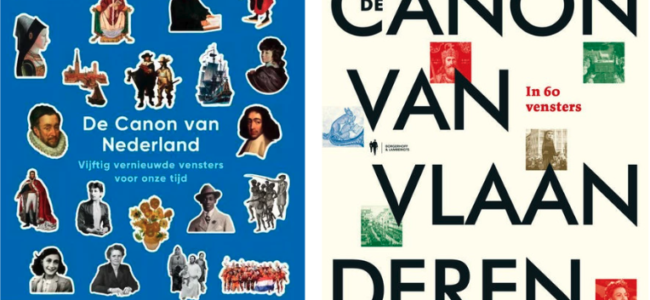
Frits van Oostrom In 2005 the Dutch Minister of Education, Maria van der Hoeven, set up a commission of wise individuals to produce a canon for primary and secondary education. This canon, the ‘Story of the Netherlands in an international context, is to take account not only of history but also of other fields such as language and literature, art, science and technology. Not so much a canon to be flaunted as a banner, or hammered into the ground like some massive pile, but first and foremost a canon to foster and to cherish. Its purpose is, among other things, to generate a shared knowledge of (cultural) history. Ben Benaouisse or the Art of Remembering
Koen van Kerrebroeck Critics love to take stock of an artists development, sketching the broad outlines of his artistic evolution, roughing out a context for a creation that is always part of a bigger picture. And it becomes even more interesting and rewarding when the artist takes his own journey as the point of departure for his artistic output. Mohamed Ben Benaouisse, for example, sets about reconstructing and stage-managing the path he treads as an actor, choreographer and visual artist, and with each new production he invites the audience to accompany him and to reflect with him. But try as he may to achieve a new solidarity with his public, his efforts all too often founder in alienation and remoteness. Of Rabbits and Queens. The Hardship and Bliss of Learning Dutch
Derek Blyth To the author, it is impossible to imagine living in the Low Countries without talking Dutch. Deprived of the Dutch teaching he had as a native speaker of English, he would remain baffled by Dutch street names, like Beenhouwersstraat, Handschoenmarkt and Eerste Tuindwarsstraat. He would never have read Dutch-language writers like Adriaan van Dis, Jeroen Brouwers or Erik de Kuyper. Nor would he ever have discovered the gutsy lyrics of the Flemish folk group Lais. And he would probably still be wondering why so many signs in Flanders point to a town called Omleiding – which merely indicates a diversion . ‘Good butter and good cheese is good English and good Frieze. Frisian Language and Culture today
Reinier Salverda Today, as a result of almost four decades of innovative sociolinguistic research by scholars such as Durk Gorter of the Fryske Akademy in Leeuwarden, we are rather well-informed about the actual state of the Frisian language. But although it is stable, the situation of Frisian is not without problems. The Dutch Reformation Revisited Hans Cools The widespread secularisation of recent decades led to speculation that God would disappear from the Netherlands. This prediction did not come true. The terrorist attacks in New York (2001), the murders of Pim Fortuyn (2002) and Theo van Gogh (2004) and the fire in a detention centre for illegal immigrants on the edge of Amsterdams Schiphol airport (2005) threw the nation into total confusion. Sociologists and historians of all kinds are chiming in with their own answers. History, or more precisely Dutch history, is at the centre of public attention. In their recent surveys, Phil Benedict (Christs Churches Purely Reformed) and Diarmaid MacCulloch (Reformation) rightly emphasise the unique character of the early-modern Dutch religious landscape. And the Ghent historian Johan Decavele focusses on the early phase of the Reformation. One Foot in America. Antwerp and the Emigrants of the Red Star Line
Erwin Joos The Belgian shipping company the Red Star Line was established in 1872 with rich industrialists from Pennsylvania as its principal shareholders. The company worked exclusively with steamships (some of which still had auxiliary sails) sailing between Philadelphia and Antwerp. Within a year it added another line, to New York. Its first steamship, the Vaderland sailed from Antwerp for her maiden voyage on 20 January 1873. Soon, in January 2008, the MAS (Museum aan de Stroom) Museum in Antwerp will open its doors. Aldermen Heylen and Van Campenhout of Antwerp want the old Red Star Line buildings to be a permanent part of the historical heritage of the old dockland area. In and around the complex American tourists will be told the intriguing story of the long journey of their forefathers who found, when they reached Antwerp in about 1900, that they already had one foot in America... Clio Offside? University of Groningen Opens Biographical Institute
Annette Portegies Biographers choose pragmatic solutions, but they do that because they have no other choice. The never-ending battle between disciplines leads inevitably to theoretical relativism: there is no such thing as a generally applicable ‘theory of biography – because thinking with regard to biography is profoundly influenced by developments in, for example, psychology, society, and the study of literature and history. For this reason there will always be discussion about the genre; and for this reason, by definition, that discussion can never be brought to a satisfactory close. None the less, people at the University of Groningen are going to have a stab at it. The Faculty of Arts there recently offered a home to an Institute of Biography. Fate Decided Otherwise?Henk van Woerden (1947-2005)
Elsbeth Etty On 16 November, at the age of 57, Dutch writer Henk van Woerden died in his sleep in Ann Arbor as the result of cardiac arrest. Van Woerden had been delighted with all the enthusiastic reviews of his latest 'Ultramarine', a novel that if one reads between the lines is also his political testament. With his considerable experience of migration he felt compassion for migrants and was indignant about the impossible demands made of newcomers in the Netherlands. Never Sell Out. More than 25 Years of The Ex
Lutgard Mutsaers Everywhere they go, The Ex make the impossible possible by following the age-old adage ‘do it yourself (‘…because no-one else will do it for you). An American reviewer once described their sound as ‘a beautiful frenzy, a phrase from the first number on their CD 'Starters Alternators'. And youll never find one of this Dutch punk outfit's songs on a karaoke machine. The Listeners Contribution. Composing according to Joachim Brackx
Mark Delaere Although experimental music only arrived in Flanders half a century after the successes of Charles Ives and Erik Satie, it has since then achieved an impressive record of accomplishments. This is to no small extent thanks to the Stichting Logos from Ghent, which, under the inspiring direction of Godfried-Willem Raes, has spurred on many young composers to respond critically to the traditional organisation of concerts. One of these young people is Joachim Brackx (1975-), who, in spite of his age, has already attracted attention as an original and sensitive composer. Brackx could be called the embodiment of a New Music, in which the composer mainly asks questions about the activity of the listener. A Coffee-Cup Full of Helium. Heike Kamerlingh Onnes (1853-1926)
Dirk van Delft On 10 July 1908, Heike Kamerlingh Onnes became the first person to bring helium under control. In room E' of his Natuurkundig Laboratorium, opposite Van der Werff Park in the heart of Leiden, at the end of a long and exhausting day, he succeeded in liquefying the last of the ‘permanent gases. In so doing, he achieved a temperature of a few degrees above absolute zero (-273 °C), making Leiden the coldest place in the world. When working with frozen mercury in 1911 Kamerlingh Onnes discovered superconductivity, the phenomenon whereby electrical resistance suddenly completely disappears below a certain (extremely low) temperature. This achievement, together with the liquefaction of helium, earned him the Nobel Prize in 1913. A Truck Every Three Seconds. Antwerp and the Deurganckdok
Ewald Pironet Ten years ago the decision was taken, and in the Summer of 2005 it was officially opened in the port of Antwerp: the largest tidal dock in the world, the Deurganckdok. Thanks to this dock, large container ships putting into Antwerp no longer have to pass through time-consuming locks. Moreover, the Deurganckdok doubles Antwerps container-handling capacity . It turns Antwerp into one of the few West European ports which can provide spare capacity for container transhipment for some years to come. The cost of the Deurganckdok: 643 million euros, almost double the original estimate. A beautiful polder village was wiped from the map to make room for it. But that hasnt stopped specialists from making plans for an even larger dock in the port of Antwerp. Citizenship is the Highest Office. Job Cohen, ‘European Hero
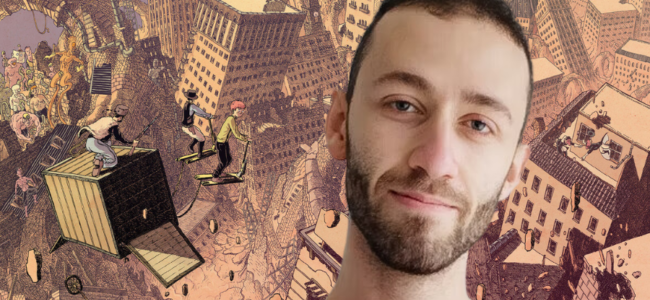
Willem Breedveld Job Cohen quietly waits his turn. He is polite. He is engaging. But he never hesitates to say whatever needs to be said, and is always prepared to step into the breach for groups or individuals who, for whatever reason, are in danger of being overruled‘. Amsterdams mayor has an unerring instinct for preserving good relations. He adds his weight to the scales whenever they seem likely to be tipped out of balance. These qualities have not gone unnoticed. TIME Magazine recently named him one of the European Heroes of 2005 for the unique way in which he defused the racial tension that surfaced after the murder of Theo van Gogh. At the beginning of November 2005, he was awarded the Citizenship Prize by the Flemish P&V Foundation. The Passion of Creating. Christophe Coppens, Designer Artist
Veerle Windels The fact that Christophe Coppens chose not to exhibit hats at a show, when hats are after all the hallmark of this Belgian designer, is significant. Although Coppens gained fame in Belgium with his hats, he is at home in many fields, as is evident from his recent range of mens accessories, his various exhibitions in Belgium and elsewhere and a range of decorative items he produced a couple of years ago, which among other things included a candle in the shape of a babys face and a condomière (a box for holding condoms), all of which had nothing to do with his more usual line in hats. Harmony. The Conciliatory Figurativeness of Matthijs Röling
Frank van der Ploeg Artists who choose painting as their medium have a hard time of it with the art critics. When they work figuratively in the tradition of the “old masters”, their work is seen as almost deliberately perverse. For years the realistic figurative movement has been virtually ignored by museums and critics alike. The public, though, has never gone along with this. There seems always to be a demand for painted images of reality. One of the most important representatives of this movement in the Netherlands is Matthijs Röling. Three Museums Working in Harmony. The ‘Vlaamsekunstcollectie Project
Dirk van Assche 'Vlaamsekunstcollectie', written as one word and meaning literally ‘Flemish art collection, is a new name for a collaborative project involving the three most important art history museums in Flanders: those of Antwerp, Bruges and Ghent. The project, which was set up in 2001 by the museum managements, covers all areas of the museums activity: collection logging and cataloguing, restoration, exhibitions, academic research, merchandising, security, publicity, communication, etc. Short Takes Filip Matthijs A regular feature comprising short reviews of a selection of socio-cultural events and works recently published in the Low Countries. |
![]() |